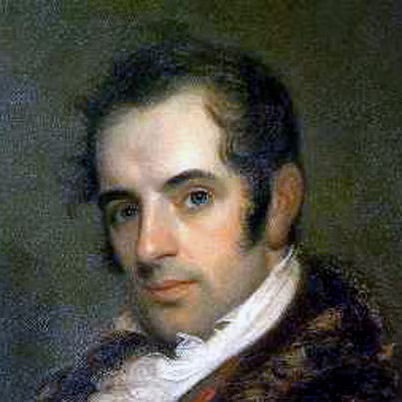
Washington Irving and the Birth of an American Gothic Legend
Washington Irving (1783-1859) was born and raised in New York City to a merchant family. In 1815 he moved to London to represent his family’s import company. The business failed, but that allowed Irving time to travel in Europe, where he came into contact with the region’s deep literary traditions. This was a crucial period for Irving as he developed a determination to earn his living by his pen.
On returning to the United States, Irving published a series of essays included in The Sketch Book of Geoffrey Crayon in 1820. “The Legend of Sleepy Hollow” and “Rip Van Winkle” were among those essays, and they established Irving as a writer of note. “Sleepy Hollow” reflected his deep study of European Gothic literature. This genre, which included such well-known works as Mary Shelley’s Frankenstein, rejected the rational, classically influenced works of the Enlightenment. Gothic literature focused instead of developing a sense of mystery, suspense, and dread. For this reason, they tended to be set in foreboding locations like castles, crypts, or monasteries.
“Sleepy Hollow” established an American Gothic literature by demonstrating how the European Gothic style could work in an American setting. In Irving’s hand, the fears that permeated European Gothic became anxieties related to the wildness of the frontier, indigenous peoples, war, and the supernatural. The lasting effects of historical traumas such as the Revolutionary War and the actions of over-zealous puritanical predecessors appear in “Sleepy Hollow.”
In Gothic literature such as Irving’s work, a character’s understanding and rationality fail in the face of something terrifying. But Gothic does not simply frighten; it compels readers toward the inexplicable. The bucolic, but shadowed, setting of Sleepy Hollow invites readers to explore a story where history could plausibly mingle with legend. Despite the natural beauty and seemingly contented dwellers, Sleepy Hollow is a place of recent violence. Irving’s references to the slain Hessian, the hanged Major John André, and — looking further back in time — the Salem witchcraft-trial writings of Cotton Mather echo the anxieties of the region’s people. Mather’s writings portrayed witchcraft as a threat to the Puritan community. This view of the event, in which people had murdered their neighbors on false witchcraft claims, did not sit well with most Americans by the late 1700s. (And in a stroke of humor and irony, note that Crane’s wholesale acceptance of Mather’s ill-informed writings both amplifies Crane’s terror at night and undermines his credibility as a scholar.)
Gothic, in short, is the realm where reason fails. Irving hints at this repeatedly in “Sleepy Hollow.” Later Gothic writers from the 1800s include Edgar Allen Poe and Nathaniel Hawthorne. But unlike Poe’s darker works, Irving’s sense of humor leavens the dread. You can find a similar thread of humor in the works of Mark Twain and later, in the humor and supernatural elements present in the works of modern writers such as George Saunders.
On this website, the spelling in Irving’s story has been updated sparingly to retain to the original flavor of the work. Defined words are highlighted in blue, followed by brief parenthetical definitions. A handful of sentences have been deleted to remove racial references that serve little purpose, now more than 200 years since the publication of the story, but to distract from the narrative. If you would like to read these sentences, they occur in two scenes — when the messenger informs Crane of the Van Tassels’ party and when music is performed at the gathering.
Comments or questions? Send an email to: lc@legendsh.org
 legendsh.org